
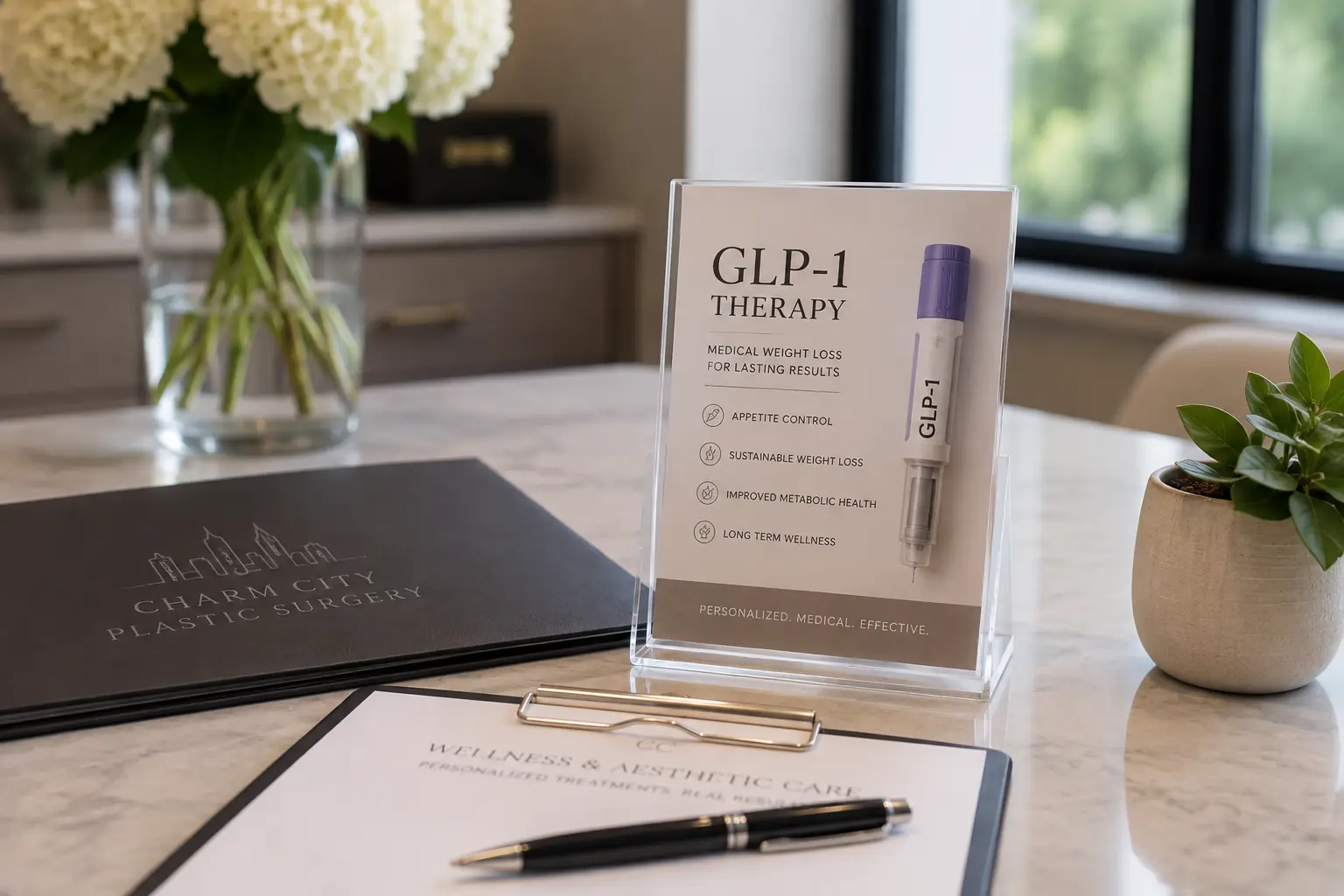
GLP-1 medications have become increasingly popular for medical weight management, helping many people reduce appetite, improve portion control, and achieve meaningful weight loss. As these medications have become more widely used, patients have also started looking for ways to personalize treatment based on their goals, side effects, and long-term maintenance needs. One approach receiving more attention is GLP-1 microdosing.
Microdosing generally refers to using a smaller amount of a GLP-1 medication than the standard therapeutic dosing schedule. Rather than automatically increasing to higher doses, some patients may work with a qualified medical provider to determine whether a lower dose can provide benefits while minimizing unwanted effects.
At Charm City Plastic Surgery, medical weight management is approached as an individualized process. The appropriate medication, dose, and treatment plan can vary significantly from one person to another. Understanding what GLP-1 microdosing means—and its potential benefits and limitations—can help patients have a more informed conversation with their medical provider.
Key Takeaways
- GLP-1 microdosing generally means using a lower-than-standard dose or remaining at a lower dose instead of automatically increasing treatment over time.
- There is no universally established microdosing protocol. The appropriate dose depends on the medication, your response, side effects, medical history, and weight-management goals.
- Some patients may respond well to lower doses, particularly if they experience meaningful appetite control without needing higher therapeutic doses.
- Lower dosing may improve tolerability for some patients, but it does not eliminate the possibility of side effects.
- Microdosing may be discussed as part of a maintenance strategy after weight loss, although long-term dosing should be determined individually with a qualified medical provider.
- Patients should never adjust GLP-1 doses on their own. Medication changes, injection schedules, and dose adjustments should always be medically supervised.
What Are GLP-1 Medications?
GLP-1 stands for glucagon-like peptide-1, a naturally occurring hormone involved in several processes related to appetite, digestion, and blood sugar regulation. GLP-1 receptor agonist medications mimic some of the actions of this hormone.
Depending on the specific medication, GLP-1-based treatments can help regulate appetite, increase feelings of fullness, and slow gastric emptying. Some medications also act on additional hormonal pathways. For example, tirzepatide works on both GIP and GLP-1 receptors.
Several GLP-1-based medications are FDA-approved for either type 2 diabetes, chronic weight management, or both under different brand names and indications. Because these are prescription medications with specific dosing recommendations, treatment should be managed by a qualified healthcare professional rather than adjusted independently.
What Does Microdosing GLP-1s Mean?
There is not currently one standardized medical definition of “microdosing” GLP-1 medications. Generally, the term is used to describe taking a lower dose than the standard therapeutic dose or remaining at a lower dose rather than continuing to increase according to a typical titration schedule.
Standard GLP-1 treatment commonly begins with a relatively low starting dose. The dose may then be gradually increased over time. This titration process is intended in part to help the body adjust to the medication and reduce gastrointestinal side effects.
Microdosing takes the idea of lower dosing further. Instead of assuming that every patient needs to reach the highest approved dose, a medical provider may evaluate whether a lower dose is appropriate based on the patient’s response, goals, tolerability, medical history, and other factors.
It is important to distinguish individualized medical dosing from self-directed dose changes. Patients should not split doses, change injection schedules, or alter prescription medications without guidance from the healthcare professional managing their treatment.
GLP-1 Microdosing vs. Standard Dosing
| Consideration | Standard GLP-1 Dosing | Individualized Lower-Dose Approach |
|---|---|---|
| How it works | Typically begins with a low starting dose and gradually increases according to the medication’s recommended schedule | A patient may remain at a lower dose or use a lower dose based on response, tolerability, and treatment goals |
| Primary goal | Reach an effective therapeutic dose while allowing the body time to adjust | Find the lowest safe and effective dose for the individual patient |
| Appetite control | May provide increasing appetite suppression as treatment progresses | Some patients may experience adequate appetite control at a lower dose |
| Side effects | Gastrointestinal side effects may occur, particularly during dose increases | Lower or slower dosing may improve tolerability for some patients, but side effects can still occur |
| Weight-loss response | Standard therapeutic doses may be necessary for some patients to achieve meaningful results | Some patients may respond well to lower doses, while others may not |
| Maintenance | Long-term treatment may be appropriate depending on the patient | Lower-dose treatment may be discussed as part of an individualized maintenance strategy |
| Medical supervision | Prescription and monitoring are required | Dose changes should only be made with guidance from the healthcare provider managing treatment |
| Established protocol | Follows manufacturer and FDA-approved dosing recommendations | There is currently no universally established “microdosing” protocol |
Why Are People Interested in Microdosing GLP-1s?
One reason GLP-1 microdosing has attracted attention is that people can respond very differently to these medications. One patient may experience minimal effects at a starting dose, while another may notice substantial appetite suppression or gastrointestinal symptoms.
Some patients are interested in finding the lowest effective dose rather than continually increasing their medication. Others may be exploring lower-dose strategies because they have reached their weight goal and want to discuss maintenance with their provider.
There are also patients who respond well to GLP-1 treatment but struggle with side effects as the dose increases. In these circumstances, a healthcare provider may determine whether adjusting the treatment plan is appropriate.
The key is personalization. A lower dose is not inherently better, and a higher dose is not automatically necessary. The appropriate approach depends on the individual patient and the medication being prescribed.
Microdosing May Help Some Patients Manage Side Effects
Gastrointestinal symptoms are among the most commonly discussed side effects associated with GLP-1 medications. Patients can experience nausea, vomiting, diarrhea, constipation, or abdominal discomfort, particularly when beginning treatment or increasing the dose.
Because these effects can be dose-related for some patients, slower titration or remaining at a lower dose may sometimes improve tolerability. A provider can evaluate symptoms and determine whether adjusting the dose, delaying an increase, modifying eating habits, or choosing another treatment strategy makes sense.
Microdosing should not be viewed as a guaranteed way to eliminate side effects. Even relatively small doses can have side effects, and certain adverse reactions require medical evaluation rather than simply reducing a dose.
Patients experiencing persistent vomiting, severe abdominal pain, significant dehydration, or other concerning symptoms should contact their healthcare provider.
Could a Lower Dose Still Support Weight Management?
The goal of medical weight management is not necessarily to use as much medication as possible. The goal is to find a safe and effective strategy that supports meaningful, sustainable results.
Some patients may respond to relatively low doses of GLP-1 medications. They may notice reduced hunger, fewer cravings, earlier feelings of fullness, or greater control over portion sizes without requiring higher doses.
Other patients may need standard therapeutic doses to achieve clinically meaningful results.
This variability is one reason medical supervision matters. Providers can evaluate progress over time rather than relying exclusively on the number on the scale. Changes in appetite, body composition, nutrition, physical activity, energy, side effects, and overall health can all help determine whether a treatment plan is working.
GLP-1 Microdosing and Weight Maintenance
One of the biggest conversations surrounding GLP-1 medications involves what happens after a patient reaches their desired weight.
Obesity is a chronic condition, and weight regain can occur after weight-management medication is discontinued. For some patients, long-term pharmacologic treatment may therefore be appropriate. Others may need a different maintenance strategy based on their health and individual circumstances.
This is one area where discussions about lower-dose GLP-1 treatment have become particularly common. A patient who has achieved significant weight loss may wonder whether a lower dose could help maintain appetite control without continuing the same dose used during active weight loss.
However, there is not yet a universally established “microdose” maintenance protocol for GLP-1 medications. Long-term dosing decisions should be made individually with a healthcare provider using the available evidence, the medication’s prescribing information, and the patient’s response.
Microdosing Is Not the Same as a Standard Starting Dose
It is also important to understand that GLP-1 medications already use gradual dose escalation.
Many patients begin treatment at a low introductory dose specifically designed to allow their bodies to adjust. Depending on the medication, that starting dose may not be intended to produce the full therapeutic effect.
Someone remaining at an introductory dose indefinitely is therefore not necessarily following an evidence-based maintenance strategy simply because they are taking less medication.
A qualified provider can explain the difference between a manufacturer’s recommended starting dose, a therapeutic dose, and any individualized dosing strategy being considered. This helps patients avoid making treatment decisions based solely on social media trends or anecdotal experiences.
Can Microdosing GLP-1s Help Preserve Muscle?
Muscle preservation is an important consideration during any significant weight-loss program. When people lose weight, the weight lost is not exclusively body fat. Some lean mass can also be lost.
Taking a smaller GLP-1 dose does not automatically prevent muscle loss. Preserving lean mass generally requires a broad strategy that considers adequate nutrition, sufficient protein intake when appropriate, and resistance training. However, by slowing the rate of weight loss with a lower GLP-1 dose, it may be easier to preserve muscle mass while still losing fat.
This is another reason patients can benefit from viewing GLP-1 medications as one component of a comprehensive weight-management plan rather than a standalone solution.
For patients who are losing weight quickly or struggling to eat enough because of significant appetite suppression, their provider may need to evaluate their medication dose and nutritional intake.
Why Medical Supervision Is Especially Important
GLP-1 medications are prescription drugs, and they are not appropriate for everyone. A provider needs to consider a patient’s medical history, current medications, weight-management goals, previous treatments, and potential contraindications before prescribing them.
Medical monitoring also provides an opportunity to evaluate how a patient is responding over time. If weight loss is too rapid, side effects become difficult to tolerate, or the medication is not producing the expected results, the treatment plan can be reassessed.
Patients should never create their own microdosing protocol by estimating medication amounts or changing how an injection device is intended to be used. Doing so can result in dosing errors or inconsistent treatment.
A medically supervised approach prioritizes safety rather than simply trying to use the smallest possible amount of medication.
Microdosing Should Be Part of a Larger Weight-Management Strategy
Whether someone uses a standard GLP-1 dosing schedule or an individualized lower-dose approach, medication works best as part of a broader strategy.
Sustainable weight management involves developing habits that support health beyond medication alone. Protein intake, hydration, nutrient-dense foods, resistance training, regular movement, adequate sleep, and realistic lifestyle changes can all play a role.
This becomes especially important for patients considering plastic surgery after significant weight loss. Reaching a stable weight and supporting the body nutritionally can help patients prepare for procedures intended to address loose skin or reshape areas affected by major weight changes.
At Charm City Plastic Surgery, conversations about weight management can therefore extend beyond simply reaching a target number on the scale. The ultimate goal is to help patients develop a plan that aligns with their health, lifestyle, and aesthetic goals.
Is GLP-1 Microdosing Right for You?
There is no single GLP-1 dose that is ideal for everyone. Some patients may respond well to lower doses, while others may need standard therapeutic dosing to experience meaningful benefits. Your response can also change throughout treatment.
If side effects are interfering with daily life, appetite suppression feels excessive, or you are approaching your weight goal and wondering what maintenance should look like, those are important topics to discuss with your medical provider.
Rather than focusing specifically on whether you should “microdose,” it may be more useful to ask what the lowest safe and effective dose is for your individual situation.
Explore Medical Weight Management With Charm City Plastic Surgery
GLP-1 microdosing reflects a larger shift toward personalized medical weight management. Instead of assuming that every patient should follow an identical path, individualized treatment considers how the patient responds, what side effects they experience, and what they ultimately hope to achieve.
For some people, a carefully managed lower-dose approach may be worth discussing. For others, following the standard therapeutic dosing schedule may provide better results. Because research into nonstandard microdosing strategies is still developing, these decisions should always be made with appropriate medical guidance.
Charm City Plastic Surgery can help patients explore medical weight-management options based on their individual needs and long-term goals. Whether you are beginning your weight-loss journey, struggling with your current treatment plan, or considering how to maintain your results, a personalized consultation can help determine the next step. Contact us today to book an appointment.